News
Local start-up’s valuable Victoria connections
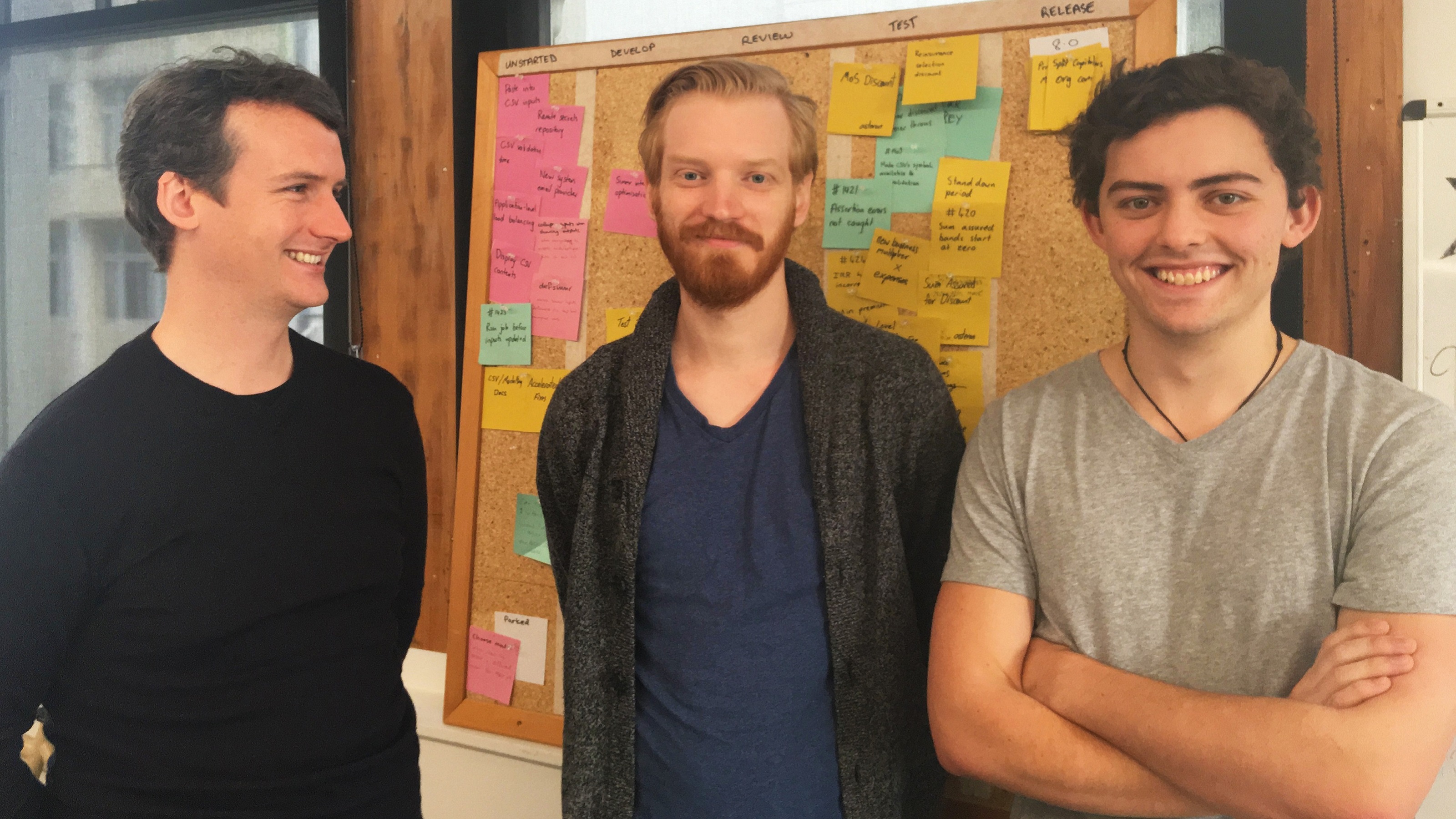
Montoux offers software that provides insights into life insurance companies’ products, pricing and profitability. The fast-growing Wellington-based business has clients in New Zealand and Australia. Dr Stephen Nelson was hired at Montoux as a software engineer fresh after his graduation from Victoria in 2012. Stephen completed a Bachelor of Science with Honours, and a PhD in Computer Science. “When I was job hunting I had a few different offers but decided on Montoux because it was a start-up. That was attractive to me,” he says. Stephen joined co-founder Gert Verhoog and fellow Victoria alumni Simon Doherty in a small office in Lyall Bay. Montoux’s development team has since grown to eight developers and the team has moved to the central city. “At the start, it was really an idea. Gert had developed a prototype that they wanted to turn into a product. I spent my first six months creating a web platform that was useable for non-technical people,” says Stephen. “I’m a full stack developer, which is a relatively rare role in New Zealand. I really like that my job is varied and I get to work on pretty much everything. And now working as team leader I get to contribute even more.” Stephen isn’t the only Victoria alumni at Montoux. The company currently employs four graduates and one former postdoctoral researcher from Victoria’s School of Engineering and Computer Science. Another three alumni have moved onto other positions elsewhere. Montoux is now starting an office in New York, and hiring a software engineer/data scientist to be based there. “Our connection to the University is very valuable to us. We've employed quite a few Victoria graduates—all positive experiences,” says Gert. “We hire senior software engineers because of the complexity of the work that we do and technology we work on. It seems to be a big jump from having an undergraduate degree to working on our large systems. This says a lot about the calibre of Victoria graduates.” This is why Montoux, similarly to companies like Google and Facebook, often hires candidates with postgraduate education. “The skills students gain through research is important—we apply a lot of research and theory to the problems we solve,” says Stephen. “Our employees learn a lot on the job, whether it’s programming languages or tools.” Victoria graduates Tim Jones and Luke Inkster agree. They were both hired as software engineers at Montoux in early 2017. “I’m enjoying the opportunity to be part of a company that’s doing cool things, in an environment that means your work is thorough and has to be constantly critiqued,” says Tim, who is in the process of completing his PhD in Software Engineering. Luke, who previously worked at Xero, says he really liked the idea of working at a start-up. “It’s interesting to build things from scratch and to be involved in the development of processes. At this point I still only know a tiny chunk of what the whole company is learning—you really have to apply yourself at Montoux. It’s great.” Victoria University is home to one of the leading programming languages research groups in the Southern Hemisphere.
Victoria alumna helps give Google Maps the green light
 Victoria University of Wellington alumna Anna Friedlander has gone from being a problem-solving, data-driven computer science student, to one of the 57,000 Google employees delivering search-engine functions people can’t imagine living without.
During study for her undergraduate degree at Victoria, Anna was a finalist for Google’s Anita Borg Scholarship, attending a scholars’ retreat at the Google Sydney office.
“I guess it was this experience that got me on the Google Scholars list, but it wasn’t until the second time that I was contacted by a recruiter that I realised it wasn’t a scam and that Google were interested in me,” says Anna, who completed her Master of Computer Science at Victoria in 2013.
Her Master’s research with the radio astronomy group at Victoria focused on developing new methods to automate the process of finding galaxies in astronomical images.
“Data from radio astronomy has one big similarity with other big data today: there is an almost unimaginable amount.
“Radio telescopes produce exabytes of data on hundreds of millions of objects, so automated methods of detection are absolutely crucial. Current methods find bright objects really well, but aren’t as good for finding faint sources, or those that are spread out”.
An exabyte is one billion gigabytes, or 1018 bytes.
After graduating, Anna was offered a position as a software engineer at Google Sydney where she worked in the Geo Monetisation team experimenting with different advertisement formats to optimise their relevance and usefulness.
In mid-2015 Anna transferred to the Google Zurich office where she began working on the book-a-ride (taxi) mode in Google Maps Mobile, a service allowing users to compare ride service options, a project she describes as the highlight of her career to date.
“It’s amazing to know that people in places as diverse as London, Mumbai, New York, Nairobi, Rio, and Wellington have seen and used a function of the app that I helped to develop”.
While the work Anna is doing at Google may be different to her research at Victoria, she says the skills she learnt during her degree have been invaluable to her career.
“Victoria’s focus on working across disciplines and sharing knowledge from those who have different expertise has set me up to work with people who all have different functions across Google.”
Victoria University of Wellington alumna Anna Friedlander has gone from being a problem-solving, data-driven computer science student, to one of the 57,000 Google employees delivering search-engine functions people can’t imagine living without.
During study for her undergraduate degree at Victoria, Anna was a finalist for Google’s Anita Borg Scholarship, attending a scholars’ retreat at the Google Sydney office.
“I guess it was this experience that got me on the Google Scholars list, but it wasn’t until the second time that I was contacted by a recruiter that I realised it wasn’t a scam and that Google were interested in me,” says Anna, who completed her Master of Computer Science at Victoria in 2013.
Her Master’s research with the radio astronomy group at Victoria focused on developing new methods to automate the process of finding galaxies in astronomical images.
“Data from radio astronomy has one big similarity with other big data today: there is an almost unimaginable amount.
“Radio telescopes produce exabytes of data on hundreds of millions of objects, so automated methods of detection are absolutely crucial. Current methods find bright objects really well, but aren’t as good for finding faint sources, or those that are spread out”.
An exabyte is one billion gigabytes, or 1018 bytes.
After graduating, Anna was offered a position as a software engineer at Google Sydney where she worked in the Geo Monetisation team experimenting with different advertisement formats to optimise their relevance and usefulness.
In mid-2015 Anna transferred to the Google Zurich office where she began working on the book-a-ride (taxi) mode in Google Maps Mobile, a service allowing users to compare ride service options, a project she describes as the highlight of her career to date.
“It’s amazing to know that people in places as diverse as London, Mumbai, New York, Nairobi, Rio, and Wellington have seen and used a function of the app that I helped to develop”.
While the work Anna is doing at Google may be different to her research at Victoria, she says the skills she learnt during her degree have been invaluable to her career.
“Victoria’s focus on working across disciplines and sharing knowledge from those who have different expertise has set me up to work with people who all have different functions across Google.”
A tilt in the right direction
 A group of Victoria University of Wellington alumni has developed an interactive gaming system to help take the chore out of physiotherapy exercises.
The system—a lightweight balance training board called ‘Tilt’—allows the user to play games by standing on and tilting the board, while at the same time strengthening their muscles and improving their overall balance.
The developers, including Swibo’s Benjamin Dunn, Lukas Stoecklein, Connor Broad and Zac Bird, formed the idea for Tilt at Victoria’s annual Entrepreneur Bootcamp.
Benjamin holds a Bachelor of Engineering from Victoria, while Connor has also studied here. Zac Bird is also a VUW alumni with a Bachelor of Design Innovation.
“We wanted to make it easier for people to carry out their physiotherapy exercises and recover properly, and we realised playing games can be an incentive,” says Benjamin.
“The system uses any smartphone to connect the board to a computer running the games. The phone can then record the board’s movements and measurements, which are analysed by computer software. This helps physiotherapists and sports trainers track the user’s improvements and provide tailored training as time goes on.”
The system is already used by professional sports trainers and could extend beyond this, says Benjamin.
“A lot of people can benefit from these kinds of exercises, including the elderly, children or those with disabilities. It’s very helpful for preventing injuries before they occur. It’s also for people who just want to be a little bit more active and have fun gaming.”
The current three games— NeoZen, Hexile and Unbearable—see users race their friends in space rockets, solve puzzles in an island adventure or fight back against deadly bears.
The team is already developing more games and hopes to begin bulk manufacturing of the boards through their recently launched Kickstarter campaign.
“We see the potential to make a real difference with Tilt and are excited for people to start using it and seeing its benefits,” says Benjamin.
This year’s Bootcamp teams are preparing for their final pitch event on 24 February. The Bootcamp is run by Victoria University and Viclink, the University’s commercialisation office, in partnership with The BizDojo, Deloitte Private and Chapman Tripp.
“The Victoria Entrepreneur Bootcamp brought our team together, and the combination of our different backgrounds encourages and facilitates collaboration,” says Benjamin.
“That collaboration is what fuels the creativity you need for entrepreneurship.”
Photo credit: Olivia Pitcher
A group of Victoria University of Wellington alumni has developed an interactive gaming system to help take the chore out of physiotherapy exercises.
The system—a lightweight balance training board called ‘Tilt’—allows the user to play games by standing on and tilting the board, while at the same time strengthening their muscles and improving their overall balance.
The developers, including Swibo’s Benjamin Dunn, Lukas Stoecklein, Connor Broad and Zac Bird, formed the idea for Tilt at Victoria’s annual Entrepreneur Bootcamp.
Benjamin holds a Bachelor of Engineering from Victoria, while Connor has also studied here. Zac Bird is also a VUW alumni with a Bachelor of Design Innovation.
“We wanted to make it easier for people to carry out their physiotherapy exercises and recover properly, and we realised playing games can be an incentive,” says Benjamin.
“The system uses any smartphone to connect the board to a computer running the games. The phone can then record the board’s movements and measurements, which are analysed by computer software. This helps physiotherapists and sports trainers track the user’s improvements and provide tailored training as time goes on.”
The system is already used by professional sports trainers and could extend beyond this, says Benjamin.
“A lot of people can benefit from these kinds of exercises, including the elderly, children or those with disabilities. It’s very helpful for preventing injuries before they occur. It’s also for people who just want to be a little bit more active and have fun gaming.”
The current three games— NeoZen, Hexile and Unbearable—see users race their friends in space rockets, solve puzzles in an island adventure or fight back against deadly bears.
The team is already developing more games and hopes to begin bulk manufacturing of the boards through their recently launched Kickstarter campaign.
“We see the potential to make a real difference with Tilt and are excited for people to start using it and seeing its benefits,” says Benjamin.
This year’s Bootcamp teams are preparing for their final pitch event on 24 February. The Bootcamp is run by Victoria University and Viclink, the University’s commercialisation office, in partnership with The BizDojo, Deloitte Private and Chapman Tripp.
“The Victoria Entrepreneur Bootcamp brought our team together, and the combination of our different backgrounds encourages and facilitates collaboration,” says Benjamin.
“That collaboration is what fuels the creativity you need for entrepreneurship.”
Photo credit: Olivia Pitcher
Solving a Moving Problem
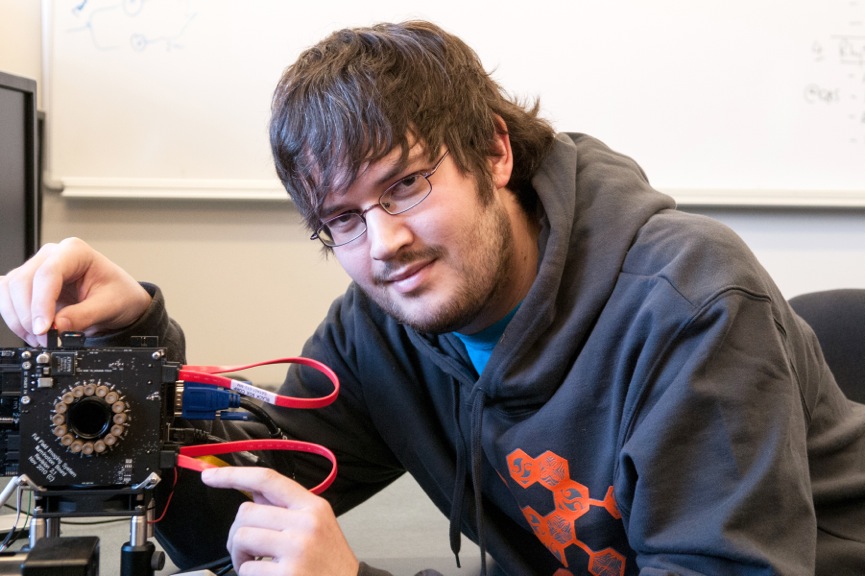
Graduate's innovative software goes worldwide
DoView helps companies visualise outcomes in strategic planning, management, monitoring and evaluation of tasks and is gaining worldwide appreciation:
Please see their website
http://www.doview.com/
Or a recent stuff article
http://www.stuff.co.nz/dominion-post/business/8885411/Fulbright-scholar-has-program-for-success
It is great to see our Computer Science (and Software Engineering) degrees help our graduates develop innovative software with worldwide applications.
A Family Affair
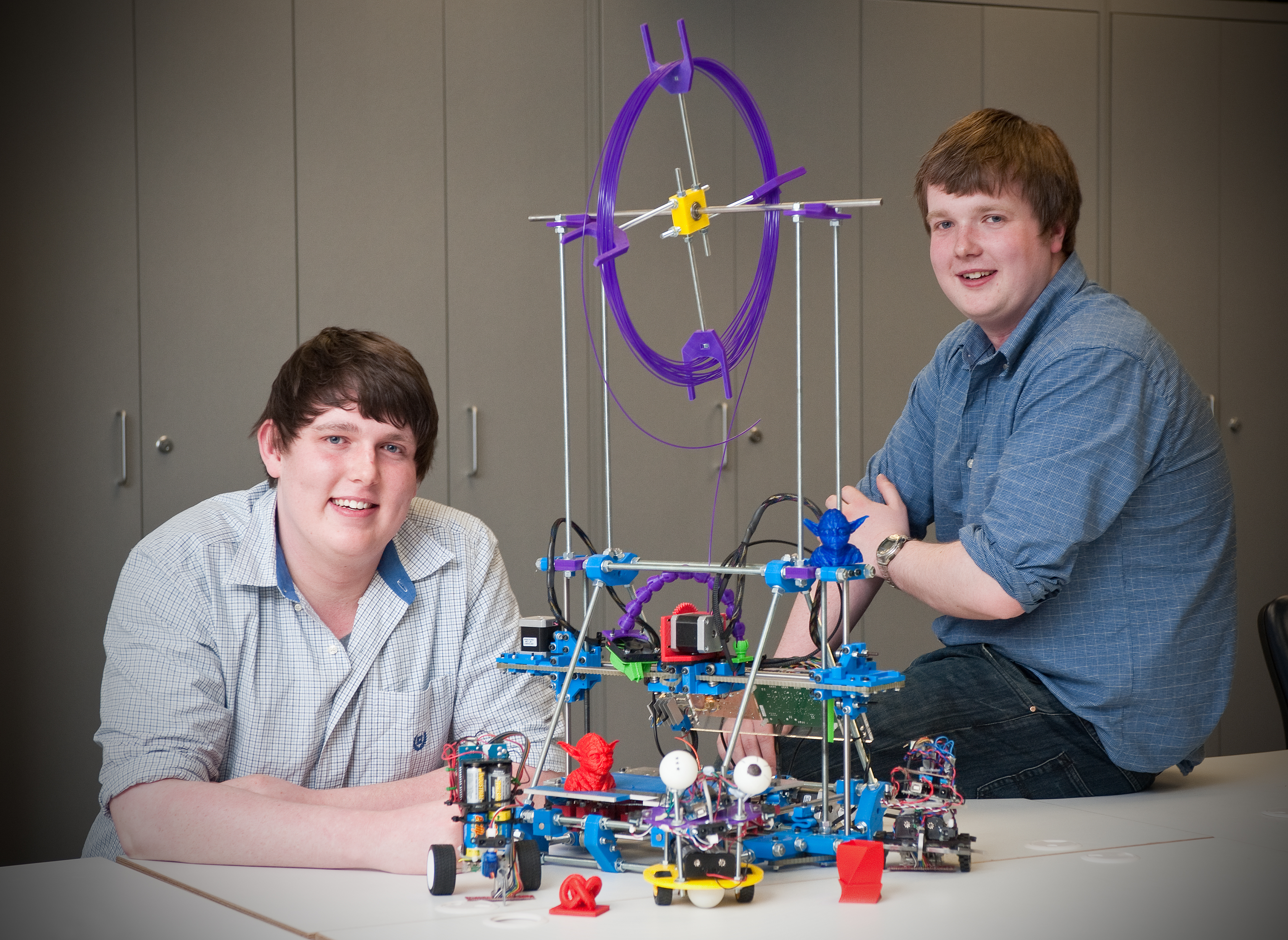
A passion for problem-solving leads brothers to collaborate on study and work
Seeing the interesting assignments his brother was doing for his Engineering degree at Victoria University of Wellington confirmed Alex Quinlivan’s decision to follow the same path. John Quinlivan is a third-year student and Alex is in his first year. Both are majoring in Software Engineering.
“We spent a lot of our childhood mucking about with computers and played our fair share of video games,” says John. “Eventually the passion for ‘how does it work?’ extended into the tertiary education field.”
Alex always knew he’d study computer science or engineering because he was drawn to computing and problem-solving.
“When decision time came, I was swayed by the interesting courses that my brother was taking, as well as some of the assignments, which looked like something I’d be keen on doing. The other drawcard was the sheer number of courses you can choose from for a Software Engineering degree at Vic.”
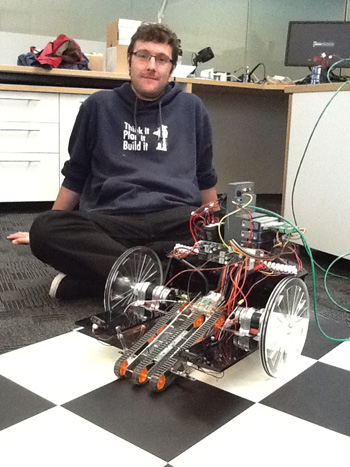
The first-year Autonomous Vehicle Challenge is one of the assignments that hooks students into Engineering, says Lecturer Dr Will Browne. Students have to make a vehicle using a micro-processing board, a gear box and a motor driver. Sensors are added to improve performance in a competition to see whose invention takes top honours.
The hand-sized vehicles—which range from mini-tank lookalikes to sand buggies and go karts—have to look good, be recyclable and able to complete physical tasks such as weight pulling, a drag race, a slalom and navigating a maze. “The challenge happens at the end of the first trimester so students are thrown in at the deep end, but it’s really popular and a great way to get students engaged in many aspects of engineering,” says Will.
Although Victoria’s Engineering degree is relatively new, having siblings and cousins involved at the same time is increasingly common, says Will. “Once other family members get to see some of the hands-on and fascinating projects Engineering students do, they get inspired to follow in their footsteps. “To recommend a university course to your own whānau is a pretty high recommendation.”
Although the Quinlivan brothers are at different stages of their degree they get to take some classes together. That’s because John was Alex’s tutor in the first trimester. “It was a bit of fun having my younger brother in the tutorial,” says John, while Alex enjoyed a few perks from living in the same house as the teacher. “I could hitch a ride in to the early morning labs that started at a ludicrous time of 9am which meant I didn’t have to get up early and wait for public transport!”
Studying engineering together has also deliver benefits outside of the university. John and Alex have developed applications for Android and iOS systems, along with a corresponding website, and already have projects underway with several small start-up businesses.
Searched by Google
Remembering Professor Paul Austin

ECS Student Success in Robotics Research
Australasian demand for ICT jobs
- Value of digital economy in 2011 was $100 billion ICT
- demand forecasts 14,000 extra jobs in 2012 and up to a total of 35,000 by 2013
- University ICT annual enrolments down in NSW, VIC, QLD, WA & TAS
Topic revision: 23 Mar 2026, christo