XMUT 220
Course Outlines
The course introduces analysis techniques for signals and linear time-invariant systems. It includes discrete and continuous Fourier series and transform techniques, with applications to circuit analysis and communication systems. It also includes other topics in of signals and systems such as time and frequency characteristics, sampling and reconstruction, and z-transform.
Course learning objectives
Students who pass this course will be able to:
- Design, operate, and analyse continuous-time and discrete-time linear time-invariant systems.
- Calculate continuous-time & discrete-time Fourier transforms from 1st principles & by using the tables of common transforms and known properties and use Fourier transforms in the characterisation of systems and signals.
- Select proper configurations for analog-to-digital and digital-to-analog conversion systems, and to identify problems resulting from incorrect conversion design .
- Use an appropriate programming language to solve problems in statistics, linear systems and signals.
Course Schedule
Lectures are held on Tuesdays 10:15am to 11:50am and Thursdays 10:15am to 11:50am. Links to the slides of lectures can be found on the left bars. Please check your individual timetable for the schedule of the Lab sessions.
The textbook that is being referred to is
"Signals and Systems" by Alan V. Oppenheim, Alan S. Willsky, published by Pearson, 2nd edition.
Workload
The course is expected to have a total workload of about 150 hours. If you are still struggling with English, you may need to spend more time than this. This means you should expect to work on this course for about 10 hours every week.
Staff
The staff for the course are
•
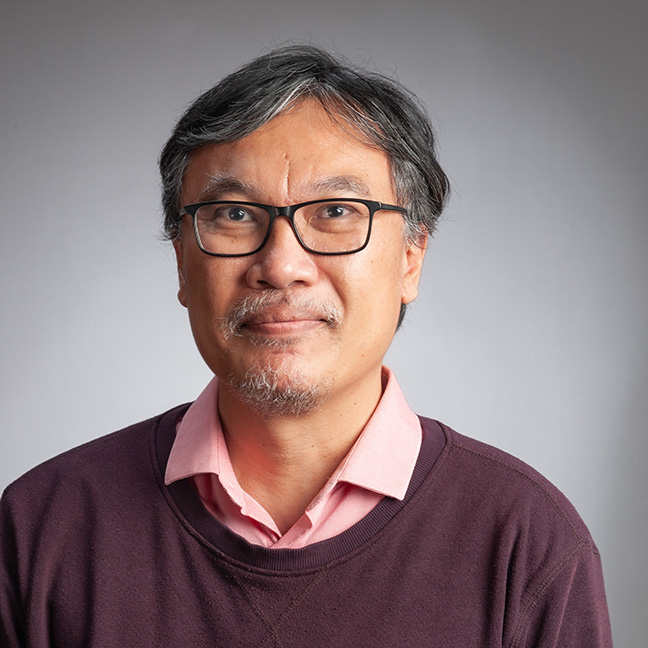
Li Yiwei (XMUT co-teacher)
Assignments and Laboratory
There will be frequent homework exercises as part of the course. These will consist of exercises to ensure you understand how to use the key concepts introduced in the lectures. There will be 4 homework assignments through the course, as well as 6 laboratory exercises to help you understand the concepts introduced in lectures (although only 2 each will be marked). You will generally work on these individually.
Assignment Submission
Online submission can be found here.
Assignment Marking and Late Penalties
The assignments and Laboratory are very important for your learning, and will together contribute a total of 40% to your final grade.
We will mark the assignments as quickly as possible.
A mandatory course requirement is that you must submit reasonable attempts for all the assignments. If you miss an assignment, contact the lecturer as soon as possible. Students who have missed an assignment without an accepted excuse will be required to do make-up assignments in order to be able to pass the course.
Model solutions to the assignments will generally made available shortly after the assignment deadline (in the lecture following the deadline), so that you can review and assess your own work, and also build on the model solutions for the next assignment. Comparing your work to the provided solutions is an important part of the learning. This means that assignments submitted after the solutions are handed out will not be marked, unless you have made arrangements on the basis of exceptional circumstances with the lecturer or senior tutor.
Working Together.
We encourage you to discuss the exercises together. However, you must submit the work and reports on your own, i.e. do not copy from whoever you have discussed with.
Make sure you read the section on plagiarism below.
Tests and Exam
There will be one mid-term test worth 10%, held during the course.
You should contact the lecturer as early as possible if you are not going to be able to attend a test at the scheduled time, or if you missed a test.
There will be a final exam at the end of the course, worth 40%.
All the assessment (assignments, tests, and exam) will address the learning objective of the course. The tests and exam will assess all the material covered by the course up to the time of the test/exam.
Grade Computation
Your grade for the course will be based on a combined mark for the assignments, the tests, and the exam:
| Item |
Weight |
|---|
| 4 Homeworks (2.5% each) |
10% |
| 6 Labs (2 to be marked; 10% each) |
20% |
| Mid term test (covers Week 1 to 8) |
30% |
| Final Examinations (covers Week 9 to 16) |
30% |
| Participations in classes and laboratory sessions |
10% |
Note:
Resit exam will cover everything from Week 1 to Week 16.
Academic Integrity and Plagiarism.
Academic integrity means that university staff and students, in their teaching and learning are expected to treat others honestly, fairly and with respect at all times. It is not acceptable to mistreat academic, intellectual or creative work that has been done by other people by representing it as your own original work.
Academic integrity is important because it is the core value on which the University's learning, teaching and research activities are based. The University's reputation for academic integrity adds value to your qualification.
Plagiarism is presenting someone else's work as if it were your own, whether you mean to or not. "Someone else's work" means anything that is not your own idea. Even if it is presented in your own style, you must acknowledge your sources fully and appropriately. This includes:
• Material from books, journals or any other printed source
• The work of other students or staff
• Information from the internet
• Software programs and other electronic material
• Designs and ideas
• The organisation or structuring of any such material
Notes
The following notes are intended to help students and staff understand what is and is not acceptable under this policy and what happens when plagiarism is suspected.
You should always properly cite any work of others that you are including in work that you submit. Some guidelines on how to do this will be found at the end of this document.
When you use someone else's work in an assignment you should be certain that you are making appropriate use of that work. While citing the work may avoid any question of plagiarism, failure to do the work yourself may mean that the submitted work fails to meet some or all of the requirements of a particular assignment. If in doubt ask your lecturer.
Do not lend your work to others. If someone submits work that is the same as or very similar to yours you should expect to be asked to explain and, if the explanation is not satisfactory, to be penalised.
If you are ever in doubt as to whether some action you have taken may be considered as plagiarism, you should consult your lecturer and/or clearly state on the submitted work the extent of the contribution from others.
Plagiarism and Code
If you are completing a programming project, you may be allowed to use code segments from a software library on the web, from model solutions in previous courses you have taken, or even from other students. If you do this, you must clearly indicate all of the code that has come from another source, and state the source.
Unless your course requirements state otherwise, you are not required to cite algorithms, data structures or source code provided with the assignment or from lecture notes.
If you are in doubt about the use of code that you have not written yourself you should check with your lecturer before submitting the program. If you have had help from someone else (other than a tutor), it is always safe to state the help that you got. For example, if you had help from someone else in writing a component of your code, it is not plagiarism as long as you state (eg, as a comment in the code) who helped you in writing the method.
Classroom Policies
* No eating, drinking, or smoking.
* Respect classmates’ ideas, opinions, and questions.
* No behaviour that prevents other students from learning.
* You are welcome to visit the instructor’s office in his office hours.
* Take good care of the laboratory facilities.