
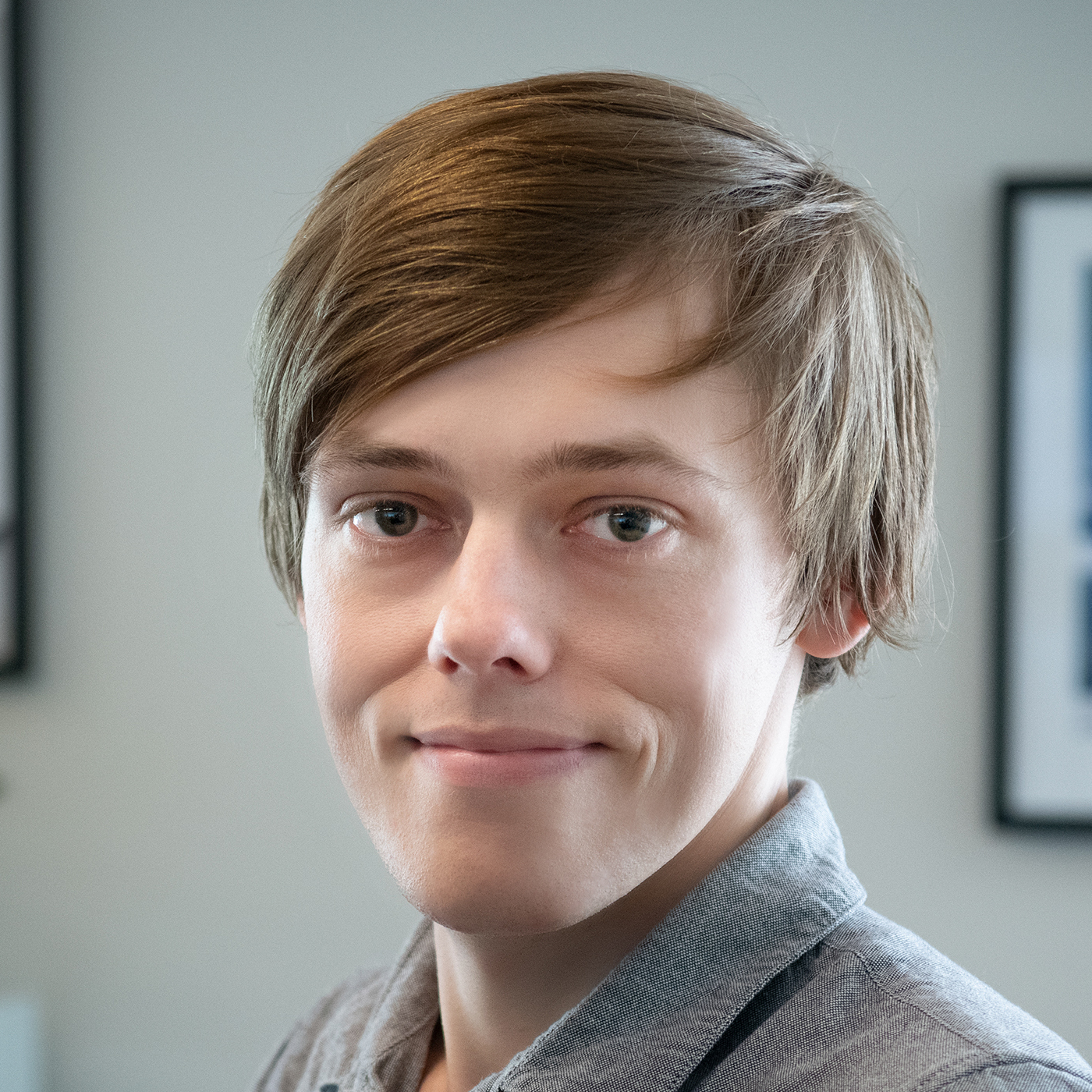
Dr Andrew Lensen
Group leader
Applied and interdisciplinary AI, explainable AI, the social impacts and ethics of AI, AI science communication, and genetic programming.
Group leader
Applied and interdisciplinary AI, explainable AI, the social impacts and ethics of AI, AI science communication, and genetic programming.
Member
AI for scientific modelling, physics-informed neural networks, and environmental applications.

Member
The ethics and social impact of AI, and cognitive science.

PhD 2026–
Mechanistic interpretability (thesis title to come)
I work on mechanistic interpretability, which explains how a neural network reaches its outputs by studying its internal parts. One method I work with is the cross-layer transcoder, which rewrites the computation inside a large language model as features that a person can hopefully understand.
Supervisors: Dr Andrew Lensen and A/Prof Marcus Frean
PhD 2025–
Re-Identification of Kākā (Nestor meridionalis) using Deep Learning to Investigate their Interactions with Urban Pest Control
I use deep learning to recognise individual kākā from trail-camera footage at bait stations around Wellington. My research investigates how many urban kākā eat brodifacoum bait, whether it is a few birds or many, and whether social groups and learning spread the behaviour.
Supervisors: Dr Rachael Shaw (Ecology) and Dr Andrew Lensen

PhD 2025–
AI for Taonga Conservation: Individual Recognition of Kākā in the Wild
My research goal is to develop AI methods for non-invasive image-based re-identification of kākā, enabling long-term monitoring to better understand their behaviour and population dynamics in urban environments. I focus on computer vision and deep feature extraction, exploring handcrafted alongside foundation and self-supervised models.
Supervisors: Dr Andrew Lensen, Dr Junhong (Jennifer) Zhao and Dr Rachael Shaw (Ecology)
PhD 2025–
Vocal Dialects of New Zealand Kākā (Nestor meridionalis)
In my PhD, I study vocal dialects in kākā, which are differences in the way kākā call from one population to another across New Zealand. I am also testing whether recordings of kākā calls can be used alongside photos to recognise and monitor individual birds.
Supervisors: Dr Rachael Shaw (Ecology) and Dr Andrew Lensen
PhD 2025–
A Machine Learning Approach to Binary Equivalence
My interests are in cybersecurity, software analysis, and machine learning. Build environment attacks mean we can't always detect compromises by looking at source code, so my research uses software analysis and machine learning to detect tampering in compiled binaries.
Supervisors: A/Prof Jens Dietrich and Dr Andrew Lensen
PhD 2024–
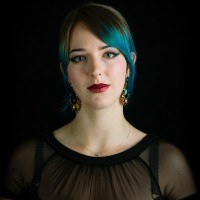
Machine Learning for Enhanced Temperature Sensing of Optical Fibres
I use machine learning to improve temperature sensing with optical fibres. I am based at the Robinson Research Institute, where fibre sensors are used to watch for quenches in superconducting magnets. A quench happens when part of a magnet suddenly stops superconducting and heats up.
Supervisors: Dr Dominic Moseley (Robinson Research Institute), Dr Andrew Lensen and Prof Rod Badcock (Robinson Research Institute)
PhD 2023–
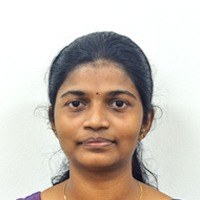
Enhanced Voice Analysis and Processing for Hearing Aids
I work on machine learning and signal processing for hearing aids. I am developing methods that help hearing aids analyse and process speech, so that the people who wear them can hear voices more clearly.
Supervisors: Prof Bastiaan Kleijn and Dr Andrew Lensen

PhD 2023–
Harnessing the Power of Deep Learning and Earth Observation for Flood Forecasting in Aotearoa
I am a remote sensing and AI researcher specialising in multispectral satellite data and deep learning for environmental monitoring, including flood mapping and land-cover analysis. I work with Python, geospatial tools, and large-scale imagery to turn complex spatial data into actionable insights for research and policy applications.
Supervisors: Dr Andrew Lensen, Dr Anya Leenman (Université de Sherbrooke), A/Prof Mairéad de Róiste (Geography) and Dr Emily O'Riordan

PhD 2020–
Producing Diverse Human-Friendly Explanations Through Evolutionary Computation
I work on explainable AI using evolutionary computation. For part of my PhD, I developed methods that find counterfactual explanations, which are the smallest realistic changes to an input that would change a model's prediction. These methods return several different counterfactuals, so that a person can choose the most relevant one. I have also used genetic programming to evolve small, readable models that explain how a complex model behaves around a single decision.
Supervisors: Dr Andrew Lensen and Prof Will Browne (Queensland University of Technology)

MSc 2025–2027
The Policy and Practice of AI Security
I study AI governance and policy. The first part of my thesis describes possible scenarios for how advanced AI could develop, and the risks and policy responses that each scenario would mean for New Zealand. The second part looks at how developers can make large language models follow the rules and values that people set for them.
Supervisors: Prof Ali Knott and Dr Andrew Lensen

MSc 2024–
AI-Driven Kākā Facial Recognition for Conservation
I use computer vision and deep learning to recognise individual kākā from their faces, so that birds can be monitored without catching them. In my thesis, I use explainable AI to work out how a bird's pose and posture affect how well it is recognised.
Supervisors: Dr Andrew Lensen and Dr Rachael Shaw (Ecology)
PhD 2023–2026
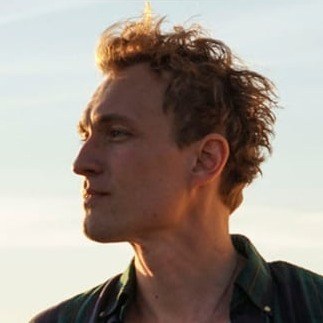
The Many Faces of Biodiversity: Climate-Driven Forest Reassembly Across Ecological Scales
Supervisors: A/Prof Julie Deslippe (Ecology), Dr Andrew Lensen and Prof Jonathan Tonkin (University of Canterbury)

MSc 2025–2026
The Impact of Generative AI on Creativity
Supervisors: Dr Andrew Lensen and Prof Bart Ellenbroek (Psychology)

MSc 2024–2026
Unified Guidance Is All You Need: Re-Engineering New Zealand Government Guidance for Trustworthy AI System Delivery
Supervisors: Dr Andrew Lensen and Prof Ali Knott
PGCert 2024–2025
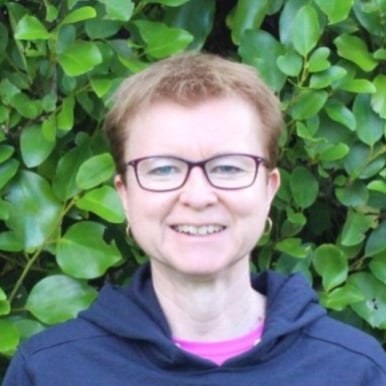
Artificial Intelligence for Smart Conservation
Supervisors: Dr Andrew Lensen and Dr Rachael Shaw (Ecology)